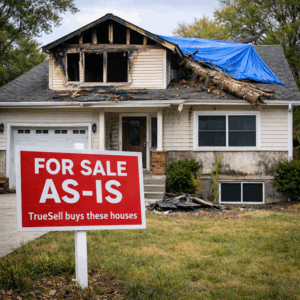
Yes — you can sell a house with severe damage, even if it has structural issues, fire damage, water damage, mold, termite infestation, or storm-related destruction. Many homeowners assume they must repair everything before selling, but that’s often not true. In fact, thousands of damaged homes are sold every year as-is to professional buyers.
This guide explains your options, what “severe damage” really means, and how to decide the best path forward.
What Counts as “Severe Damage” When Selling a House?
A house is typically considered severely damaged if repairs are extensive, expensive, or prevent traditional financing. Common examples include:
- Fire or smoke damage
- Storm, tree, or roof damage
- Flooding or water intrusion
- Mold or microbial growth
- Foundation or structural issues
- Termite or insect infestation
- Long-term vacancy or neglect
- Homes stripped down to the studs
If a property cannot qualify for FHA, VA, or conventional loans, selling through a traditional real estate agent becomes difficult, but not impossible.
Your Options for Selling a Severely Damaged House
- Repair the Home Before Selling
This option works if:
- You have access to cash or financing
- Repairs are manageable
- You’re willing to wait months
Downsides:
Repairs can spiral out of control, uncover hidden issues, and delay the sale — especially with older or heavily damaged homes.
- List the Property “As-Is” With an Agent
Some buyers will consider fixer-uppers, but:
- Most still need financing
- Inspections often kill deals
- You may receive very low offers
- The home may sit on the market
This route works best for light to moderate damage, not severe conditions.
- Sell Directly to a Cash Buyer (Most Common for Severe Damage)
This is often the fastest and least stressful option for heavily damaged homes.
Cash buyers:
- Purchase homes as-is
- Handle major repairs themselves
- Close without bank approval
- Buy homes with mold, fire, termites, or structural damage
This option is especially helpful for inherited homes, estates, insurance delays, or homeowners who don’t want to manage renovations.
Can I Sell a House with Mold, Fire, or Structural Damage?
Yes. Homes with serious issues are sold every day.
- Mold: Cash buyers remediate or rebuild
- Fire damage: Partial or full rebuilds are common
- Structural issues: Foundations, framing, and roofs can be repaired post-purchase
- Termites: Infestations don’t prevent a sale
The key is finding a buyer who understands the scope of work and is prepared to take it on.
Will I Get a Fair Price for a Severely Damaged Home?
A damaged home will sell for less than a fully renovated one — but that doesn’t mean you’re being taken advantage of.
A fair price considers:
- Current market value
- Cost of repairs
- Time, risk, and holding costs
- Closing speed and certainty
When you sell as-is, you’re trading top dollar for speed, certainty, and zero repair responsibility.
When Selling As-Is Makes the Most Sense
Selling a severely damaged house as-is is often the best choice if:
- Repairs exceed your budget
- The home has multiple major issues
- You inherited the property
- The house has been vacant
- Insurance delays caused further damage
- You need to sell quickly or avoid stress
In these situations, simplicity matters more than squeezing out every last dollar.
How TrueSell Helps Homeowners Sell Damaged Houses
TrueSell specializes in purchasing severely damaged homes in any condition. We buy houses with:
- Fire, storm, and water damage
- Mold and microbial growth
- Termite or insect infestation
- Structural and foundation issues
- Long-term vacancy or neglect
We purchase homes as-is, handle all repairs ourselves, and close on your timeline, with no agent fees, no commissions, and no pressure.
Final Answer: Can I Sell My House with Severe Damage?
Yes — you absolutely can sell a severely damaged house. You are not required to fix it, clean it, or bring it up to code before selling. The right solution depends on your goals, timeline, and stress tolerance.
If you’re unsure what your damaged home is worth or what your options are, getting a no-obligation evaluation is often the easiest first step.